News - Centrum Edukacji Przyrodniczej
Object of the month June 2024 - Napoleonite or corsite?

There are people who had a huge impact on the development of humanity. So much so that their names remain with us for a long time.
Great naturalists are usually commemorated in the names of newly discovered plants, animals or minerals, and less often in the names of streets or universities (check if they are not astronomers). Great military and political figures can usually count on more. They remind us of themselves with geographical names, such as the names of cities, such as Alexandria, Kazimierz nad Wisłą or Petersburg/Leningrad. We cannot fail to mention Mount Kosciuszko, the highest peak on the mainland of Australia (2228 m above sea level), named by Paweł Strzelecki in honour of a Polish hero, despite the fact that Australia and Kosciuszko never even met.
In this respect, Napoleon I Bonaparte comes off surprisingly poorly. Probably because such names are given to honour victors. But it is not as if he did not get anything. First of all, Napoleon has his cake in Poland!
But, let's be honest, the first major transport investment after World War II in Warsaw, the East-West route, also has its cake...
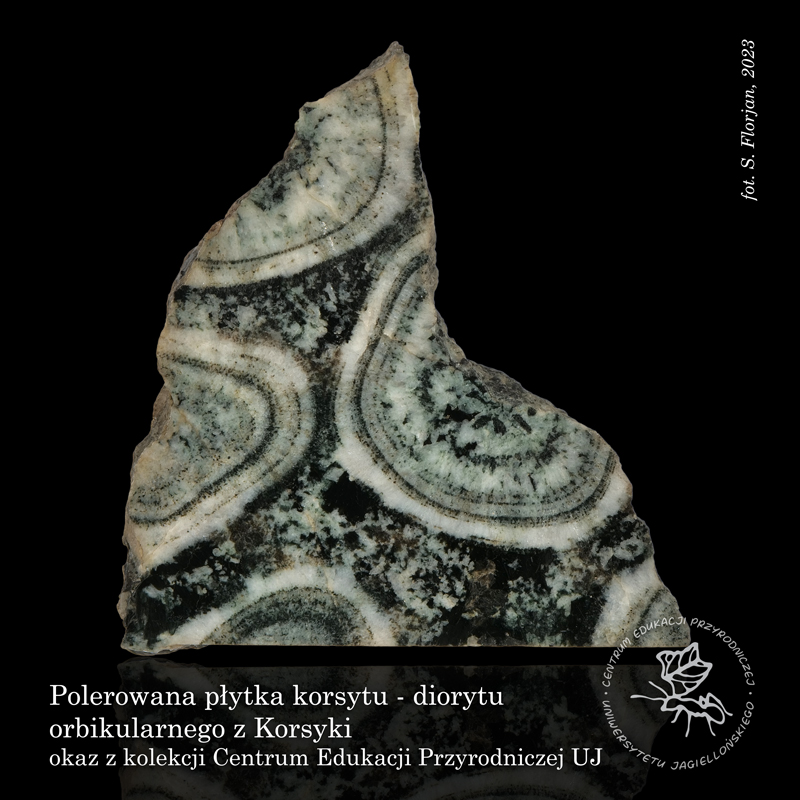
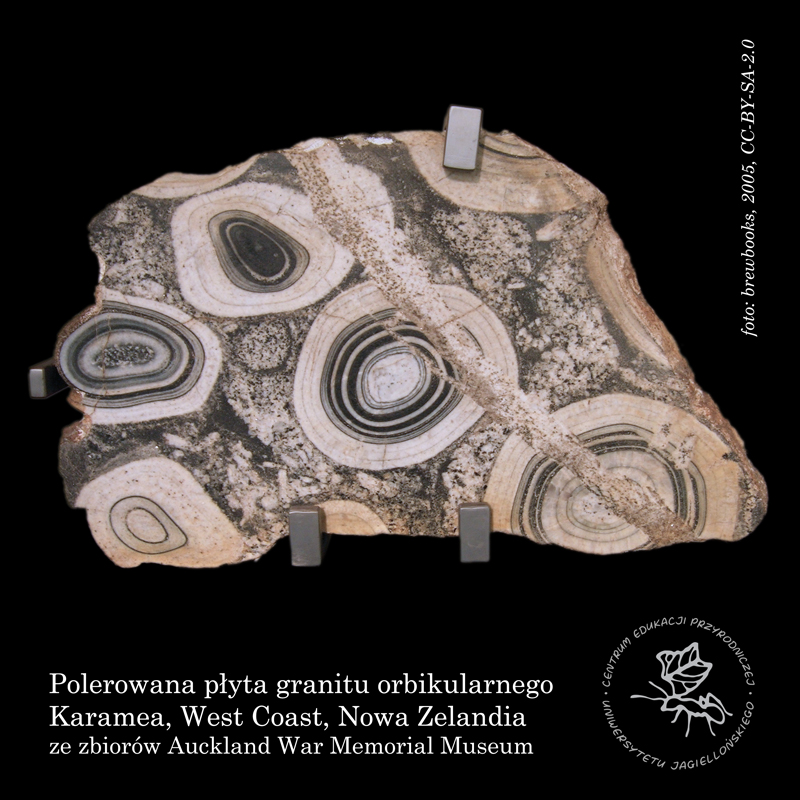
But Napoleon also got one of the most beautiful igneous rocks all to himself. Well, almost... Napoleonite, also called corsite (after Corsica - the island where Napoleon Bonaparte was born), is a specific variety of diorite found in Corsica. It is characterized by an orbicular texture, rare for plutonic rocks, i.e. one in which black and white orbicules, i.e. spherical structures with a concentric structure, are embedded in the rock mass. Orbicules in corsite consist of alternating layers of white feldspars - plagioclase and black amphiboles and pyroxenes.
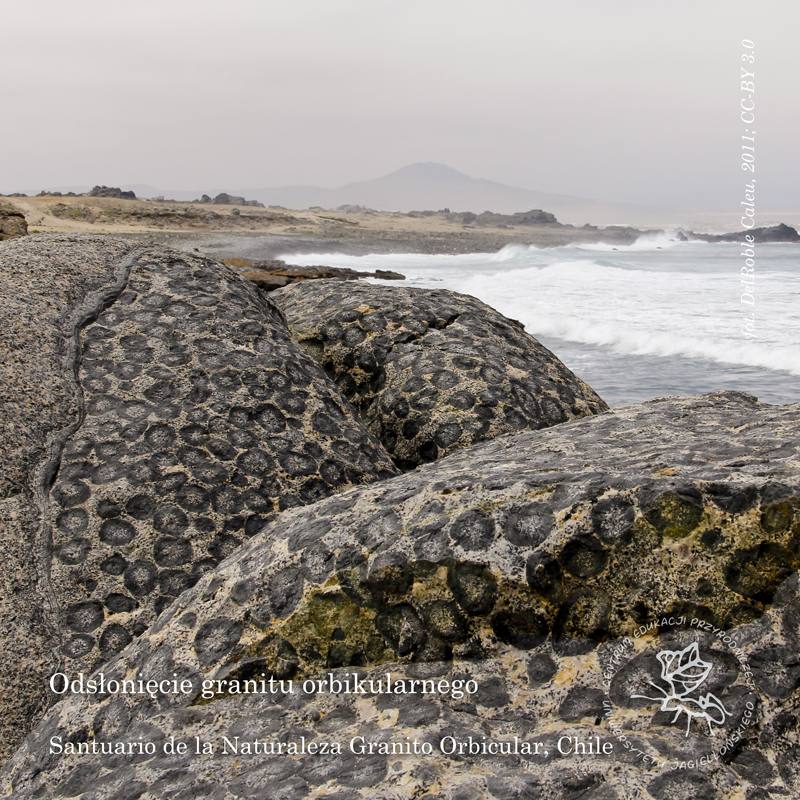
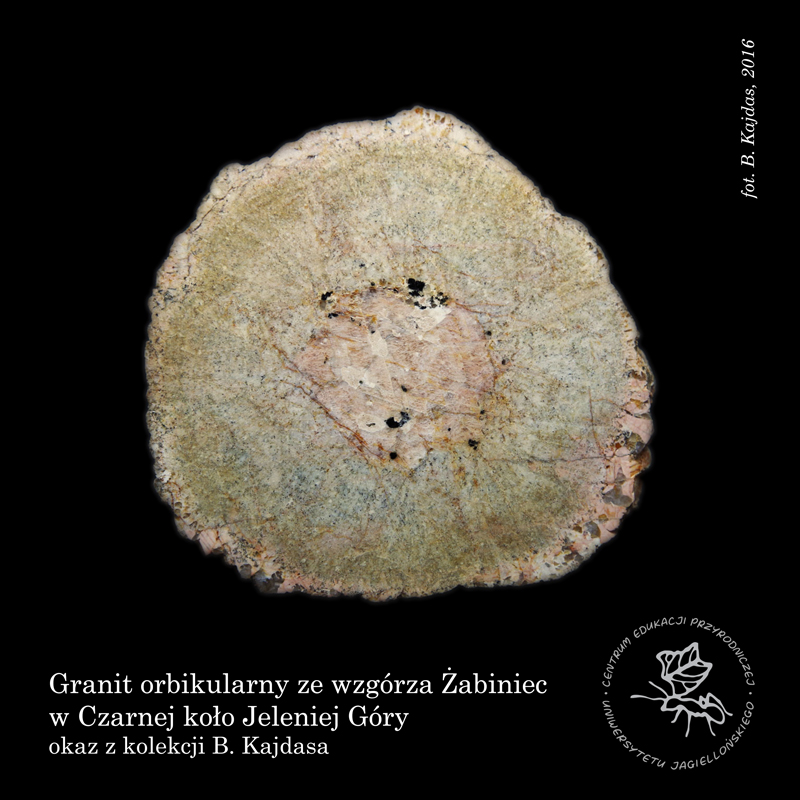
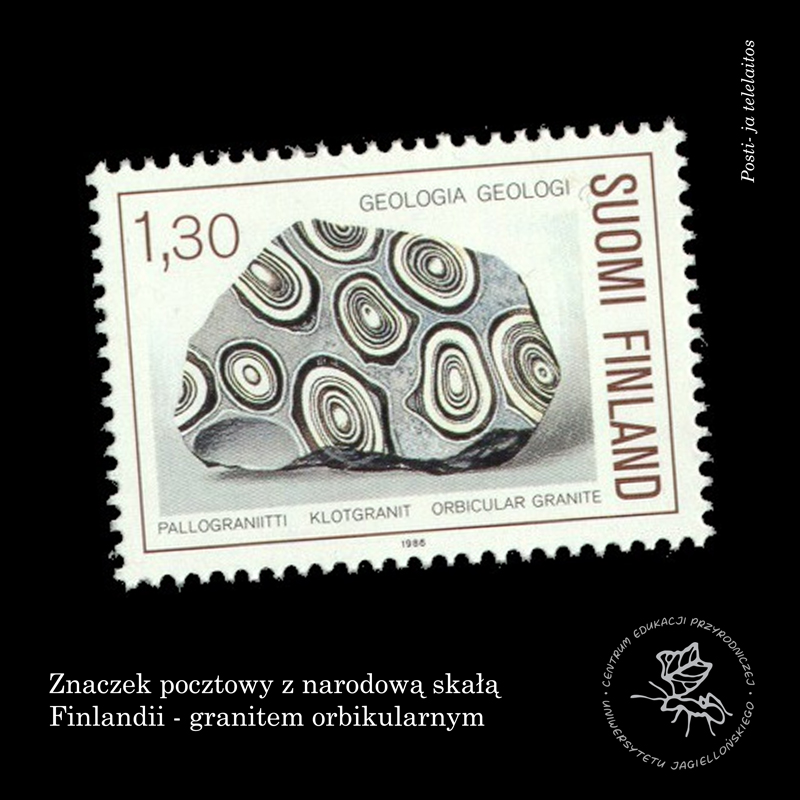
Orbiculites, as such rocks are collectively called, occur in various places. Beautiful examples are known from Scandinavia, New Zealand and Chile, among others. In Poland, we also have a representative of this group of rocks - an orbicular variety of Karkonosze granite described from the vicinity of Jelenia Góra.
Photogallery


Show more